Blog · Packaging design
Packaging that sells: 7 lessons for small Indian food brands
What I've learned designing packs for millet snacks and sattu brands from Bihar and Jharkhand, and how founders can make a small brand look shelf-ready.
 Kritika Kumari · 23 November 2026 · 4 min read
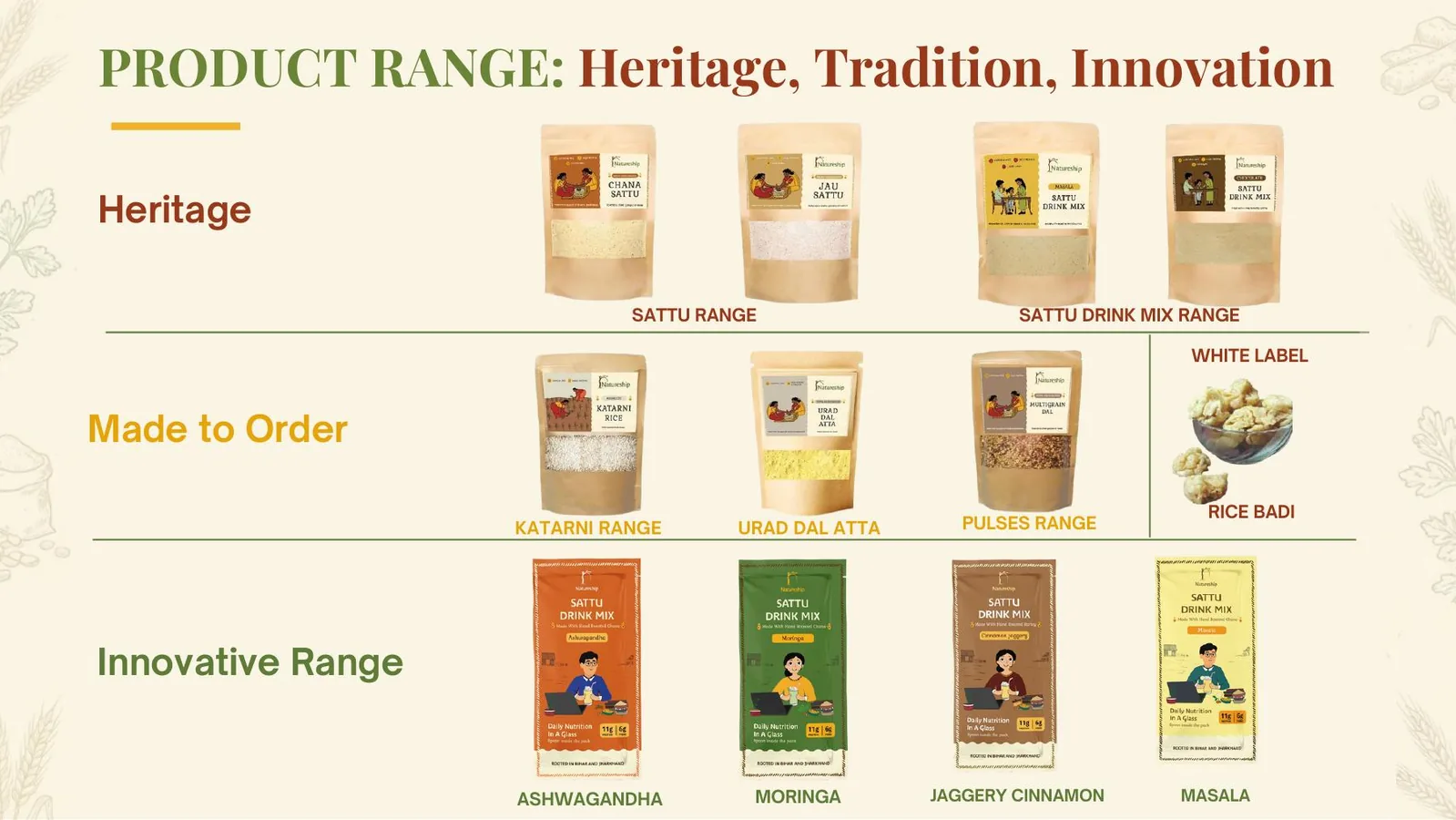
Most food founders I work with have the same problem. The product is genuinely good: millets, sattu, regional staples made the slow way. But on a shelf, or in a row of thumbnails on a quick-commerce app, it looks like every other small brand. The pack isn’t doing its job.
I’ve designed packaging and brand material for millet and sattu brands from Bihar and Jharkhand. These are the lessons I come back to on every project.
1. Design a range, not a single pack
Your first product won’t be your last. If every new flavour gets a fresh design, your brand never builds recognition.
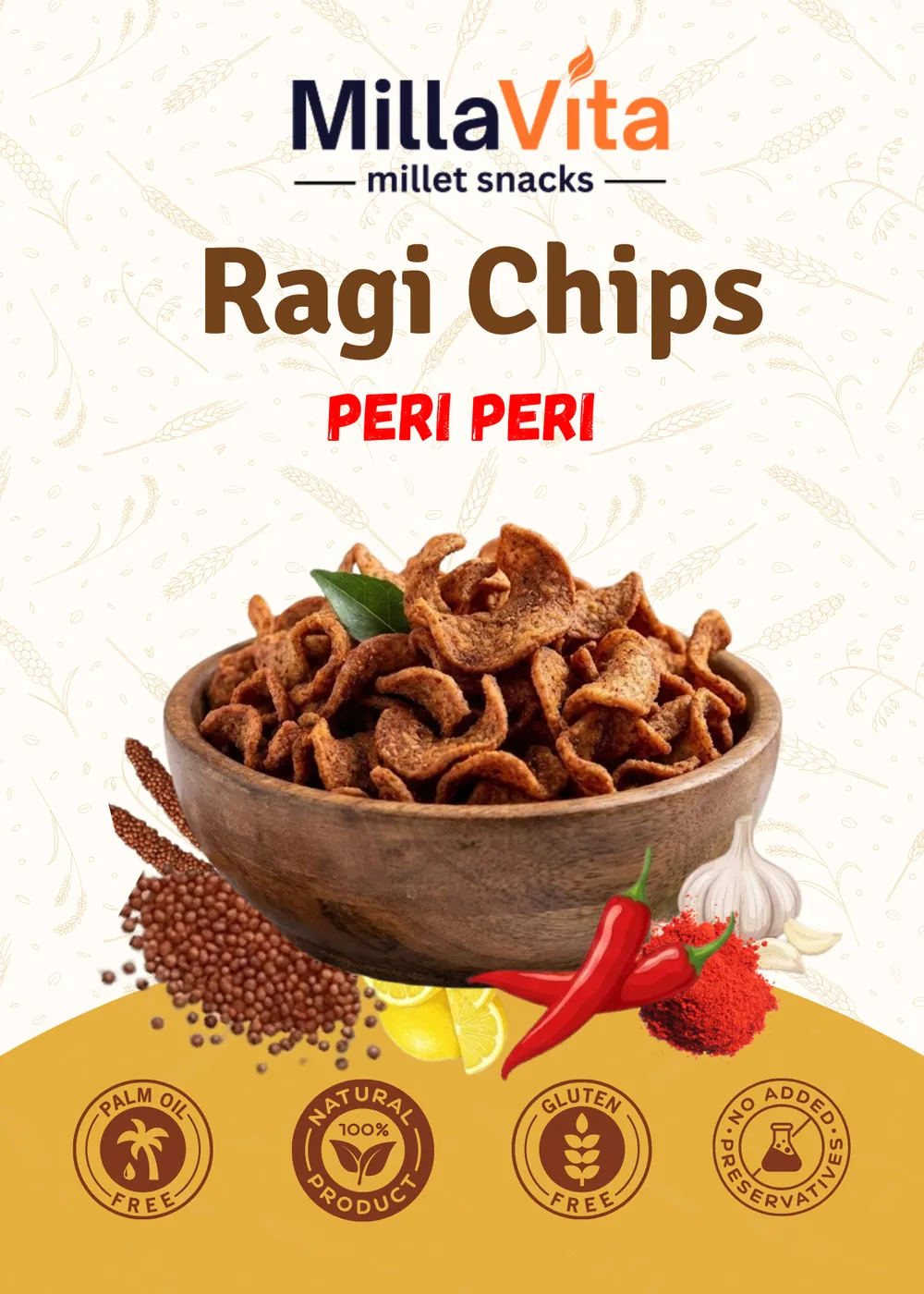
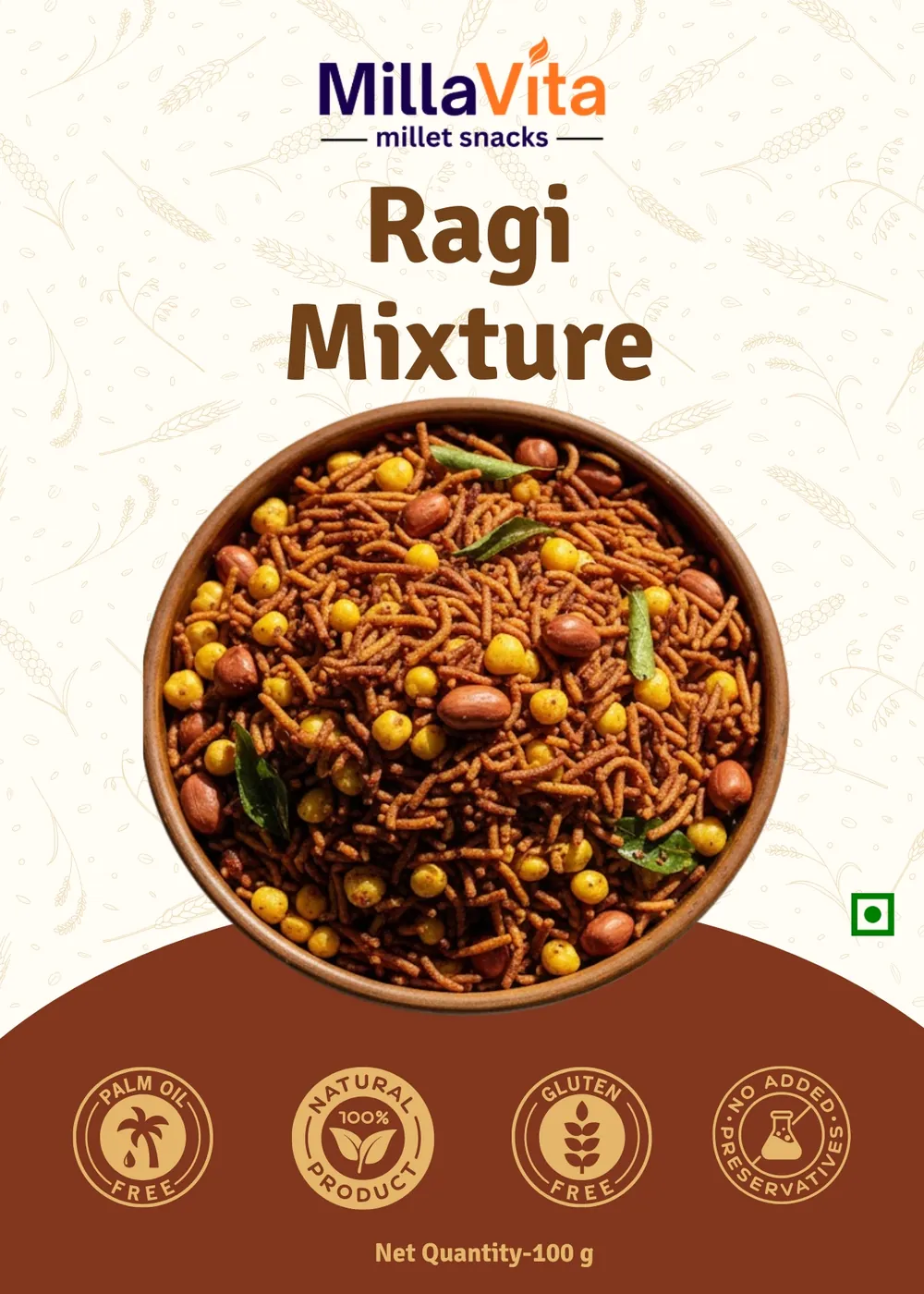
For MillaVita, a millet snack brand from Ranchi, I built one layout that carries every flavour: a clean white pouch, the product shown in a bowl, and a single colour band that changes per variant. Ragi chips, ragi mixture and ragi cookies all look like siblings. A shopper who liked one can find the next.
2. Say what it is, big and plain
A shopper gives your pack a couple of seconds. In that time they need to know what it is, not just who made it. That’s why the product name is the largest thing on the MillaVita front, larger than the logo. “Ragi Chips” does more selling than a brand name nobody knows yet.
3. Show the food honestly
Show the food itself, close up and appetising, so people know exactly what’s inside. A bowl of the real product beats an abstract pattern, especially for regional foods that urban buyers may not have tried. If someone has never eaten ragi mixture, the pack is their first taste.
4. Use a few trust badges, and only true ones
Health-led food brands love badges. Used well, they answer the questions a buyer is already asking: palm-oil free, gluten free, no added preservatives. Used badly, they become noise.
Pick the three or four claims that matter most to your buyer, make them the same size and style, and only use claims you can back up. Your mandatory label details, like your FSSAI licence number, ingredients and nutrition information, need their own clear space too. Check them with your food-safety consultant before you print.
5. Use the back of pack to tell your story
The back of the pack is where people decide whether they trust you. Most brands fill it with small print. Use it for your story instead.
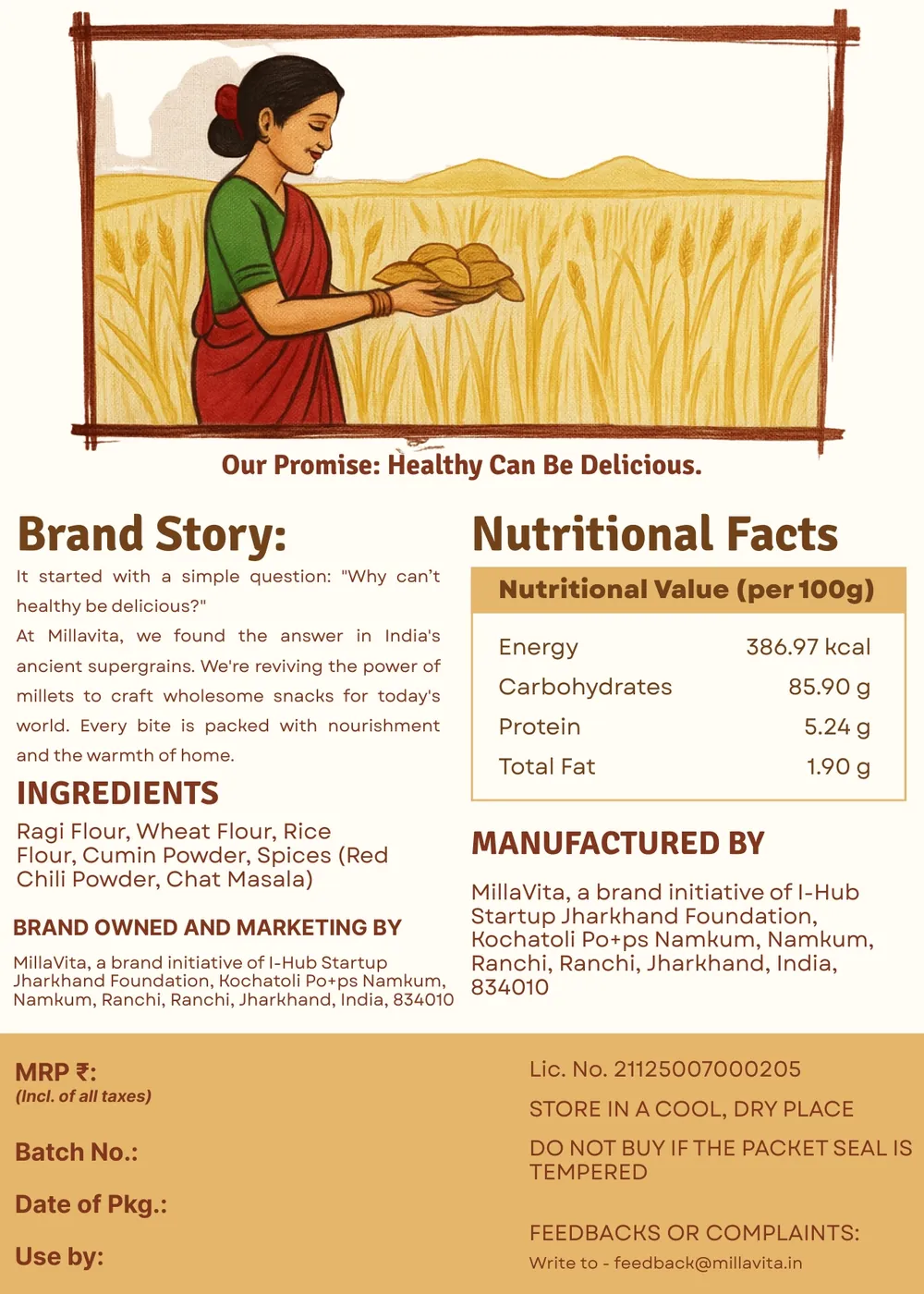
On the MillaVita back, an illustration of a woman in a millet field sits above a short brand story, with the nutrition table and ingredients organised underneath. It’s the same legal information, but now it feels like a brand with roots.
6. Let your roots be the premium
Founders from smaller towns sometimes try to hide where they come from, so they look more “national”. For food, that’s usually a mistake. “Handmade in the villages of Bihar and Jharkhand” is exactly what a city buyer looking for real food wants to hear.
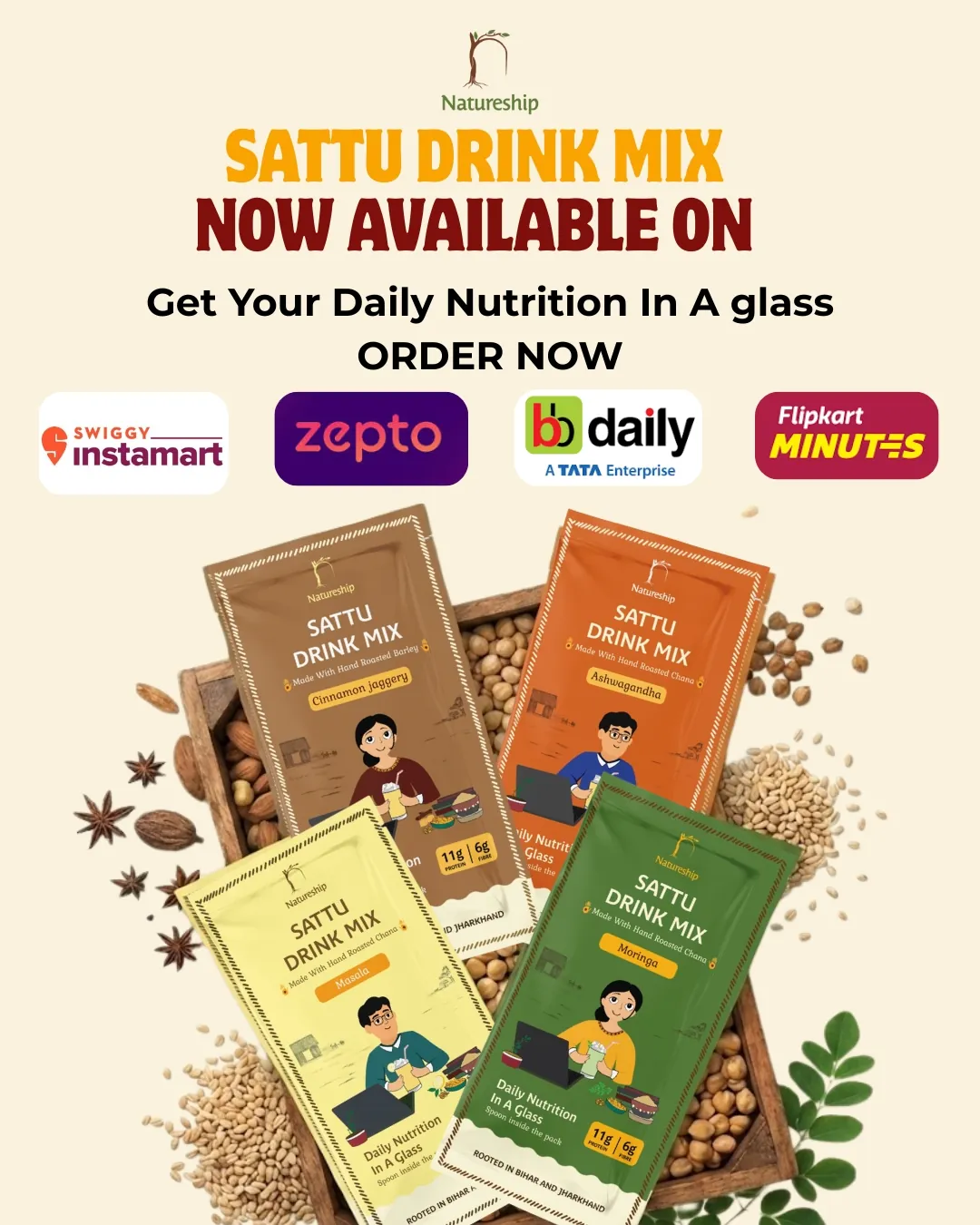
For NatureShip, every piece, from social posts to the product catalogue, carries a warm, illustrated village world. It’s the brand’s biggest advantage, so the design puts it front and centre.
7. Design for the phone screen as well as the shelf
A growing share of your buyers will first see your pack as a small square on Swiggy Instamart, Zepto or BigBasket. Before you finalise a design, shrink it to thumbnail size. Can you still read the product name? Does the colour stand out in a grid of competitors?
The short version
Good packaging doesn’t make a product better. It makes sure the right people pick it up long enough to find out.
If you’re launching a food brand, or your current packs aren’t pulling their weight, I’d be glad to take a look. You can see more of my work here.